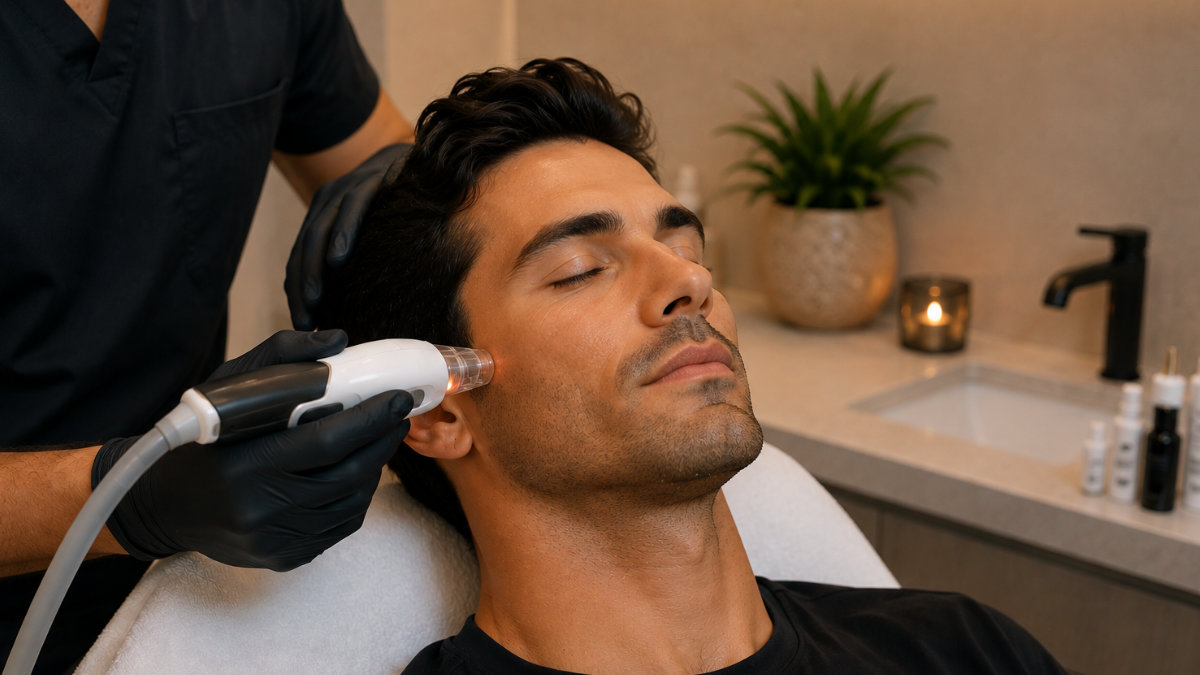
Dark spots rarely appear overnight. A summer without enough sun protection, years of accumulated sun exposure, past breakouts, or hormonal changes can gradually leave their mark on the skin until, one day, your complexion looks dull, uneven, and less uniform. In this context, IPL for facial pigmentation has become one of the most sought-after options for people who want to improve their skin’s radiance without invasive procedures.
What makes IPL interesting is not just its ability to treat visible pigmentation. When recommended at the right time and for the right type of dark spot, it can also help refine the skin’s overall appearance. That is the difference between a treatment that is simply popular and a protocol that is thoughtfully designed.
What Is IPL for Facial Pigmentation?
IPL stands for intense pulsed light. It is not exactly a laser, although many patients confuse the two because both use light energy. The distinction matters: IPL emits multiple wavelengths of light, allowing it to address several skin concerns in the same area, particularly superficial pigmentation, redness, and certain signs of sun damage.
When we talk about IPL for facial pigmentation, the goal is for the light to be absorbed by melanin concentrated in specific dark spots. That energy breaks up the pigment, which the body gradually clears. After a session, it is common for treated spots to darken temporarily before flaking off or fading over the following days.
Not all dark spots respond in the same way. Solar lentigines and much of the visible damage caused by sun exposure tend to respond better than more complex forms of pigmentation. That is why a thorough evaluation beforehand is not a minor detail; it is the foundation of a beautiful, safe, natural-looking result.
What Types of Dark Spots Can It Improve?
IPL often produces a very good response in superficial sunspots, sun-related freckles, and uneven skin tone associated with photoaging. It can also be an excellent option for someone whose skin looks “tired,” with darker areas or patches of color that make the face appear less fresh.
There are important nuances, however. Melasma, for example, is not always a good candidate for IPL. In some carefully selected cases, it may improve, but in others, heat or an inappropriate treatment plan can trigger it again. Post-inflammatory dark spots, such as those left behind by acne or irritation, also require careful evaluation because they do not all behave the same way.
In a clinical setting, the most prudent approach is to distinguish between vascular pigmentation, superficial melanin-related pigmentation, and deeper or mixed pigmentation. Many spots look similar to the naked eye, but they are not the same. Treating them all alike is often where disappointment begins.
When Is IPL Worth Considering?
IPL makes a great deal of sense when the main concern is uneven tone caused by sun exposure, small dark spots across the cheeks, forehead, or nose, and a dull complexion that needs greater clarity. It is especially appealing to patients who want visible improvement that fits into an active social and professional life.
Patients also appreciate that IPL is not intended to change facial expression or volume. It simply helps restore a more even, radiant appearance. For many women, that alone can make a significant difference in how their skin looks with and without makeup.
Still, IPL is not always the first choice. If pigmentation is deep, melasma is active, the skin is tanned, or the skin phototype is higher, another approach or a more conservative combination may be preferable. In medical aesthetics, the ideal technology is rarely chosen because it is trending. It is chosen with precision.
What Happens During a Session, and What Does It Feel Like?
Before treatment, the skin should be clean and properly evaluated. In some cases, gel is applied, and the eyes are protected. During each pulse, you may feel a brief sensation of warmth or a small snap, like a rubber band against the skin. The procedure is usually quick and tolerable.
Afterward, the skin may look slightly red for a few hours. Treated spots often darken and take on a fine, “coffee-ground” appearance before naturally flaking away. This change is part of the process and does not mean that something has gone wrong.
Recovery is usually straightforward when you follow the appropriate instructions. Avoid rubbing the skin, aggressive exfoliation, and sun exposure. Consistent, high-level sun protection is essential because freshly treated skin is more vulnerable and because sunlight is one of the main reasons pigmentation returns.
How Many Sessions Are Needed?
It depends on how pronounced the spots are, the type of pigmentation, and the condition of the skin. Some patients notice a significant improvement after just one session, particularly when treating superficial sun damage. Others need a series of spaced-out sessions to achieve a more even complexion.
From an aesthetic standpoint, it is often better to think in terms of progressive results. Beautiful skin is not necessarily skin that changes dramatically in a few days, but skin that improves consistently without looking irritated or overtreated.
Maintaining results is just as important as achieving them. Without daily sun protection, well-chosen skincare, and, in some cases, maintenance sessions, dark spots can return. Facial pigmentation is not always resolved as a one-time concern. Often, it needs to be managed as part of a long-term skincare strategy.
IPL for Facial Pigmentation and Different Skin Types
This is where clinical experience makes a difference. IPL is not suitable for every skin phototype or every situation. It often delivers particularly satisfying results in lighter skin with visible sun damage. For darker skin or skin prone to hyperpigmentation, treatment must be selected much more carefully to avoid irritation or unwanted changes in skin color.
Other factors also matter, including whether the skin is sensitized, whether active acne is present, whether retinoids have been used recently, and whether there has been recent sun exposure. Some patients may consider these minor details, but they can completely change which treatment plan is safest.
That is why an evaluation supported by facial analysis technology and medical judgment is so valuable. It is not just about looking at the spot that bothers you today, but understanding how your skin behaves overall to design a protocol that respects its balance.
What Results Can You Realistically Expect?
The best IPL result is not about erasing every imperfection until the skin looks unreal. It is about helping the face look more even, visually clearer, and fresher. Dark spots soften, skin tone becomes more balanced, and your complexion better reflects the care you already give it.
For many patients, that change has an immediate impact on how they apply makeup and see themselves in the mirror. Less need for coverage and more confidence wearing more natural-looking skin. This kind of result can feel especially refined because it does not change who you are; it simply brings greater clarity to your overall appearance.
Even so, it is important to be realistic about expectations. Deep or recurring pigmentation may improve considerably without disappearing completely. That does not mean the treatment has failed. It means your skin responds according to its biology, and a well-designed plan respects those limits.
Care Before and After Treatment
Proper skin preparation helps support treatment. Patients are generally advised to avoid tanning, intense sun exposure, and certain irritating skincare ingredients before a session, always following professional guidance. Afterward, the routine should focus on soothing, hydrating, and protecting the skin.
In the days that follow, it can be tempting to speed up the process, especially when spots darken. But patience works in your favor. Picking at the skin, removing fine scabs, or using strong exfoliants can interfere with recovery and compromise the final result.
At a clinic focused on personalized protocols, such as Medilight Center, this step receives particular attention because the outcome does not depend on the device alone. It also depends on the diagnosis, the treatment settings selected, and the care provided afterward.
When IPL Is Not the Best Option
Not every face with dark spots needs IPL. If melasma is unstable, the skin is heavily tanned, pregnancy is a consideration in certain cases, a patient is taking photosensitizing medication, or the skin barrier is compromised, it may be preferable to postpone treatment or choose another option.
IPL may also not be the best choice if the main concern is skin laxity, deep scars, or volume loss rather than pigmentation. In those cases, other technologies or combinations may offer a clearer benefit.
Good medical aesthetics is not about doing more, but about making better-informed treatment recommendations. When patients feel well guided, they are more likely to make safer decisions and achieve more satisfying results over time.
If you are considering IPL to improve facial dark spots, the right question is not simply whether it works. The more useful question is whether it works for your skin, your type of pigmentation, and your current circumstances. When that answer is grounded in a precise evaluation, your skin can look not only better, but more even, more rested, and more like you.
Book your consultation 📞 Call us: 786 413-0785To learn about options, candidacy and what the evaluation involves, visit our IPL photofacial & laser in Miami page.
Visit us
Doral: 7910 NW 25th St, Suite 202, Doral, FL 33122 · (786) 645-7044
Coral Gables: 2710 Ponce de Leon Blvd, Coral Gables, FL 33134 · (305) 339-7941