If you are looking for information on how to prepare your skin before botox, you probably do not want an obvious change or an improvised experience. Patients who research carefully usually ask about more than botulinum toxin itself. They want to know everything surrounding the treatment: what to do the week before, what to pause, whether a facial is a good idea, and how to arrive at the appointment with calm, comfortable skin.
That preparation does matter. Not because it will completely change the result, but because it can help ensure the treatment is performed on less reactive skin, with a lower risk of unnecessary irritation and better conditions for evaluating the face as it naturally is. In aesthetic medicine, the details before treatment often make the difference between a rushed decision and a well-planned approach.
How to Prepare Your Skin Before Botox Without Irritating It
The first key idea is simple: your skin should not be inflamed when you arrive for your appointment. Recent redness, sensitivity, active breakouts, or significant peeling can make it more difficult to accurately assess facial muscle movement and the condition of the skin. In addition, a compromised skin barrier, skin that is more vulnerable and irritated, can make any cleansing or antiseptic preparation feel more uncomfortable than necessary.
That is why, in the days leading up to treatment, it is usually best to stick with a stable routine rather than experiment. If you consistently use a gentle cleanser, moisturizer, and sunscreen, maintaining that routine is often better than introducing new acids, at-home peels, or intensive skincare devices. Many patients assume that “preparing” means exfoliating more. In reality, it often means irritating the skin less.
Timing also matters. If you have an important event coming up, it is generally wise not to leave treatment until the last minute. Although botox takes effect gradually and recovery is typically manageable, planning ahead gives you time to observe the result without unnecessary pressure.
What to Avoid Before Treatment
When someone asks how to prepare their skin before botox, there is usually another question behind it: what should I avoid? The nuance matters because not everything is off-limits for everyone.
In general, it may be reasonable to avoid intensive exfoliation, retinoids, recent chemical peels, and aggressive facials in the days before treatment. Not because these procedures are “bad,” but because they can leave the skin sensitized. If your skin tolerates a gentle retinoid well, you may not always need to stop it several days in advance. If you tend to become red or irritated easily, temporarily pausing it may be appropriate based on professional guidance.
It is also worth discussing whether you tend to bruise easily. Some people take supplements or medications that may increase bruising. This should not be managed on your own. If you take prescription medication, discuss it with your treating professional or the physician who prescribed it. Medical treatments should never be stopped without guidance.
Alcohol during the 24 hours before treatment may increase vasodilation in some people, which can sometimes lead to more redness or a greater tendency to bruise. It is not an absolute rule, but avoiding it is a common recommendation when the goal is to arrive with the skin as stable as possible.
Do You Need a Facial Before Botox?
It depends on the type of facial and the condition of your skin. A gentle facial performed with enough time before treatment and without aggressive techniques may fit well in some cases. However, intensive extractions the day before, dermabrasion, or a protocol that leaves the skin highly sensitized is usually not the best idea immediately before injectables.
It helps to separate two different goals. One is arriving with clean, hydrated skin. The other is trying to “transform” the skin within the 48 hours before treatment. If you have comedones, congestion, or uneven texture, it may make more sense to address the skin first and schedule Botox afterward, or coordinate the timing of both treatments thoughtfully. Everything does not need to happen on the same day.
For patients with rosacea, seborrheic dermatitis, inflammatory acne, or significant sensitivity, preparation should be even more conservative. In these cases, less is often more. Calm skin allows for greater flexibility in treatment decisions and helps reduce avoidable discomfort.
The Ideal Routine During the Week Before Botox
The best pre-treatment routine is usually fairly uneventful. Use a gentle cleanser morning and night, a moisturizer suited to your skin type, and daily sun protection. If you already use active ingredients such as vitamin C, niacinamide, or hyaluronic acid and tolerate them well, they can often be continued. If you use retinol, tretinoin, or exfoliating acids and notice stinging, tightness, or peeling, a brief pause may be reasonable.
Sleeping well and staying adequately hydrated can also help, although not because they change the effect of botox. Rather, the skin may appear less reactive and the face can be evaluated more accurately. The same applies to avoiding intense sun exposure or recent tanning. Sunburned or irritated skin is not an ideal foundation for any medical aesthetic procedure.
On the day of your appointment, it is best to arrive with a clean face, without heavy makeup in the treatment area and without applying highly occlusive products. If you are coming directly from work and are wearing makeup, that is generally not a problem because it can be removed before the evaluation.
How to Prepare Your Skin Before Botox If You Have Sensitive Skin
With sensitive skin, preparation requires observing more and doing less. If you commonly react to fragrance, exfoliants, or changes in your routine, this is not the time to test new products. It is also best not to schedule procedures that generate heat, friction, or controlled micro-injury during the same week without discussing the timing first.
Some patients ask whether a glow-focused protocol, [microneedling](https://medilightcenter.com/en/blog/why-are-microneedling-facial-treatments-so-popular-this-year/), or radiofrequency can be performed immediately beforehand. The accurate answer is that it depends on the treatment, its intensity, and the clinical sequence. Some procedures can coexist within a broader aesthetic plan, but they should not be combined impulsively or simply because the schedule allows it. The order matters just as much as the indication.
If you have recently experienced breakouts, periocular eczema, or dermatitis around the forehead, frown lines, or crow’s feet, mention it before your appointment. It does not always mean treatment is contraindicated, but it may change the recommended timing or preparation. In aesthetic medicine, personalization is not a marketing gesture. It is a way to reduce avoidable mistakes.
Questions to Ask Before Considering It
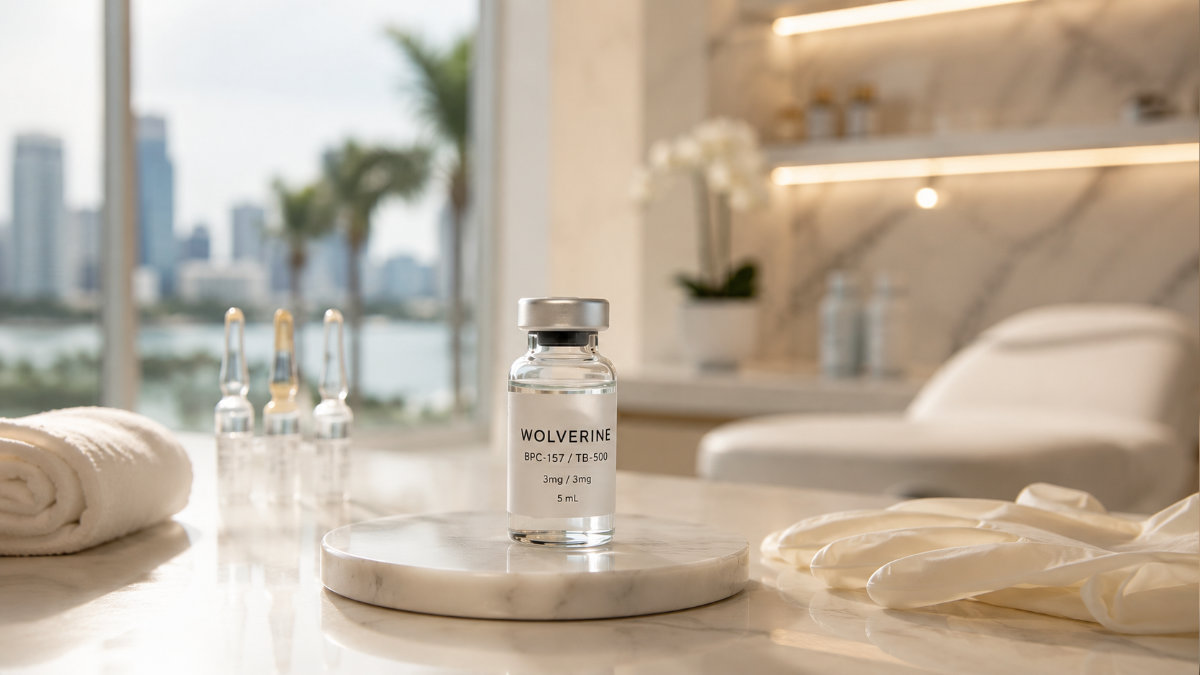
Before deciding whether the Wolverine peptide is appropriate, it is worth pausing and asking something more useful than “Does it work?” The first question is what you are trying to improve. The second is what diagnosis or evaluation supports that decision. The third, very practically, is whether another option may be more appropriate for that goal.
It also matters who is supervising the protocol, how the quality of the compound is verified, and what follow-up plan is in place. If none of those answers are clear, it is probably not the right time to move forward.
Signs That It May Be Better to Postpone Your Appointment
Preparing your skin properly also means recognizing when the timing is not right. If you have an active rash, skin infection, active herpes near the treatment area, a recent sunburn, or a visible allergic reaction, it is usually better to reassess before moving forward. Performing a procedure on compromised skin is rarely good practice.
It may also be worth waiting if you recently had another treatment and are not yet sure how your skin has responded. Sometimes the desire to “make the most” of one visit leads to too many procedures being scheduled too close together. The face does not benefit from an accelerated plan if the skin is still recovering.
What Many People Overlook
An important part of preparing your skin before Botox has nothing to do with skincare products. It happens during the consultation. Bringing older photos if you have noticed asymmetries, explaining whether you have had Botox before, sharing that you want to soften your expression without losing movement, and mentioning previous negative experiences all provide valuable information. Well-indicated Botox is not meant to freeze your features or make every face look the same. It is intended to relax specific muscles proportionally so the result is discreet in the best possible way.
Preparation also means arriving with realistic expectations. Botox does not improve pores, dark spots, or skin texture. If your main concern is [skin quality](https://medilightcenter.com/en/blog/5-signs-that-your-skin-needs-an-advanced-facial-treatment/), the conversation may need to take a different direction or include another approach at a different time. When treatment goals become confused, disappointment often comes not from the product itself, but from an imprecise indication.
Your skin is better prepared for treatment when it is calm, when your pre-treatment routine has been consistent, and when the decision is made thoughtfully rather than in a rush. At Medilight, we approach Botox and fillers with medical precision and a focus on natural-looking results, so the face appears more rested without losing its identity. If you are considering treatment, our team in Doral and Coral Gables can guide you with clinical judgment and without obligation.
Let’s find your ideal plan 📞 Call us: 786 413-0785Visit us:
📌7910 NW 25th St Suite 202, Doral, FL 33122
📌2710 Ponce de Leon, Coral Gables, FL 33134